
my pregnancy loss story
October is Pregnancy & Infant Loss Awareness month, with October 15th specifically being Pregnancy & Infant Loss Remembrance Day where candles are lit at 7pm for an hour to create a “wave of light” in memory of the little ones who are not with us. In honor of this month, I am writing this blog series to tell my own story and share all the resources I’ve gathered. If you are going through a miscarriage or are supporting a loved one through a pregnancy loss, I hope these posts can be a beacon of light for you.
Our society is slowly becoming more open about pregnancy loss, but there is still work to be done! Many people suffer silently, unsure how to talk about the intangible grief of a miscarriage, worrying that no one will understand or that they won’t be nurtured through it. But miscarriage is very common! If you have a miscarriage and start talking about it, you will realize how many others have had one too. The statistics show that miscarriage happens in about 15-20% of pregnancies and yet people assume it’s a rare occurrence and guess that it only occurs in about 5% (NIH).
I am sharing my story here to hopefully give others an idea of what a miscarriage can sometimes be like, but if you don’t like gory details or just want resources then I encourage you scroll down to see what helped me through my miscarriage or check out these more practical posts: How to Make a Miscarriage Care Basket & Resources for Pregnancy Loss.
MY STORY
A little over a year ago, we decided to start trying for a third baby. My first two pregnancies were very easy to come by, so to speak, but for some reason I sensed that this time around would be more challenging. Some of that came from not feeling quite like myself for a couple years, some of it from my experience as a nurse knowing that fertility rates decrease steeply with age.
I was surprised then when I quickly became pregnant. However, a week after my positive pregnancy test, I miscarried. I was disappointed, but because it was so early in the pregnancy, it didn’t hit me too hard emotionally or physically. It felt mostly like a heavy period.
We tried again a few months later, and I was once again surprised that it worked right away. I started getting excited, thinking about how this would be a summer baby when my husband was on break from his work as a teacher. Everything seemed to be progressing well, and even though pregnancy symptoms are not often enjoyable, I was grateful for them because I hoped that they boded well for a baby in the future.
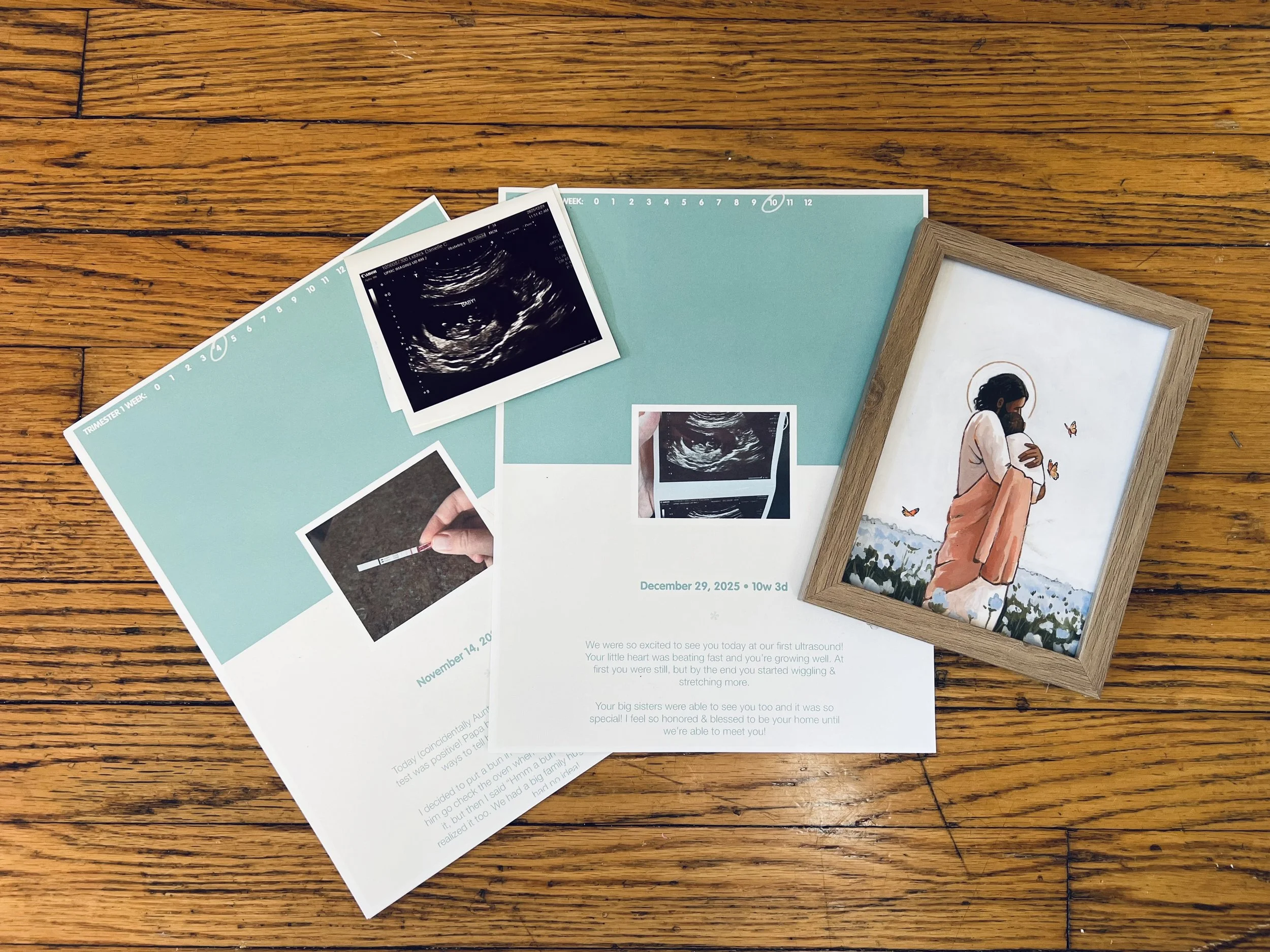
We had an ultrasound in the 10th week where we saw the tiny fetus kicking little legs with a strong pulsing heartbeat that we could see through the monitor. All this time I had been hesitant to hope, but officially seeing the baby was reassuring. Our older two children were along for the ultrasound too, and we excitedly talked about how we would have a new baby in the summer!
However, at the next appointment in the 12th week of pregnancy, the midwife couldn’t pick up a heartbeat with the doppler, so she went to get an ultrasound machine for a proper look. I was quickly on alert, knowing that in my other two pregnancies the midwives had always been able to find the heartbeat at even earlier ages. When she pulled up the screen and I saw the tiny body sunk at the bottom of the picture, I had a sense that it was over even though I hoped she’d tell me differently. She confirmed that the baby did not, unfortunately, have a heartbeat but recommended that I go for an official ultrasound just to make sure.
At the second ultrasound, I was told the same thing, that there was no heartbeat and that the baby had stopped growing in the 10th week, likely only a day or so after my last ultrasound. It is wild to me that the body can carry on for weeks acting like there’s still a pregnancy when in reality it’s over.
The midwife then informed me about my options. I could opt to wait and see if things progressed naturally, I could take misoprostol to induce contractions or I could have a D&E to surgically remove the fetus. I chose to wait, figuring that it would give me a little more time to say goodbye and come to terms with all of it.
As you can imagine, this next week was immensely long. It did allow me to have more closure about losing the baby, but it also felt unsettling to know that there was death inside my body, and it was hard to walk through my days with uncertainty and dread. Finally, after 8 days, the contractions started. I had hoped they would just feel like cramps, but no, they were actual “breathe through it” contractions, the pain all the more amplified knowing that there was no prize of a baby at the end. After hours of this, I started passing clotted blood which I hoped meant that this would soon be done.
However, the contractions continued and when I started having bigger clots along with getting nauseated and light-headed, I decided it was time to head to the hospital. We arrived just in time to have me settled in an emergency department room before more huge clots and blood came out like a waterfall onto the floor. They had originally asked me to stay in the waiting room, but when I asked for a chuck pad, they realized I was serious about the “heavy bleeding” and luckily got me into a room quickly. It would have been quite a show for the others in the waiting room!!
In the early morning I was able to have surgery to officially evacuate everything, and I felt immensely better. They gave me some IV iron and sent me home by the afternoon. However, in the span a of a few hours, my hemoglobin had dropped from 13.4g/dL to 9.8g/dL, meaning I had lost over a liter of blood and maybe close to two, so I knew that it would be a little while before I was back to full speed again (the average adult only has around 5 liters of blood).
Luckily my friends and family cared for us in so many ways over the next weeks. People delivered meals and brightened my day with flowers, notes and treats. With their support I was able to slow down and rest more than usual. Below I’ll write more specifically about what helped me through these weeks following the miscarriage.
What Helped Me Through My Miscarriage
Here are some things that helped me through my miscarriage, with acknowledgement that each person will have different preferences about what feels supportive. Hopefully these ideas can give some practical guidance about what to do or how to support someone, even though each circumstance will vary.
Treating It Like A Mini Postpartum
While I was waiting for the miscarriage to officially happen, I decided that I would treat the few weeks after it like a postpartum, because it was in essence a postpartum (which literally means “after birth”). I just wouldn’t have a baby. To truly have postpartum rest, you need to shift your mindset along with setting up supportive systems like meal trains and childcare for older siblings. Our culture values productivity, so taking intentional rest can feel radical, but it’s important if you want to recover more effectively. I mentally planned to take at least two weeks listening to my body’s need for rest, limiting excursions, and doing minimal housework/cooking.
Surrounding Myself With Coziness
I love coziness any time, but I especially lean into it in postpartum or times of grief. Wrapping myself in a favorite blanket, lighting some candles, sipping hot drinks and wearing a soft robe with warm socks nurtured me emotionally as well as physically.
Telling Others about it & Accepting Their Support
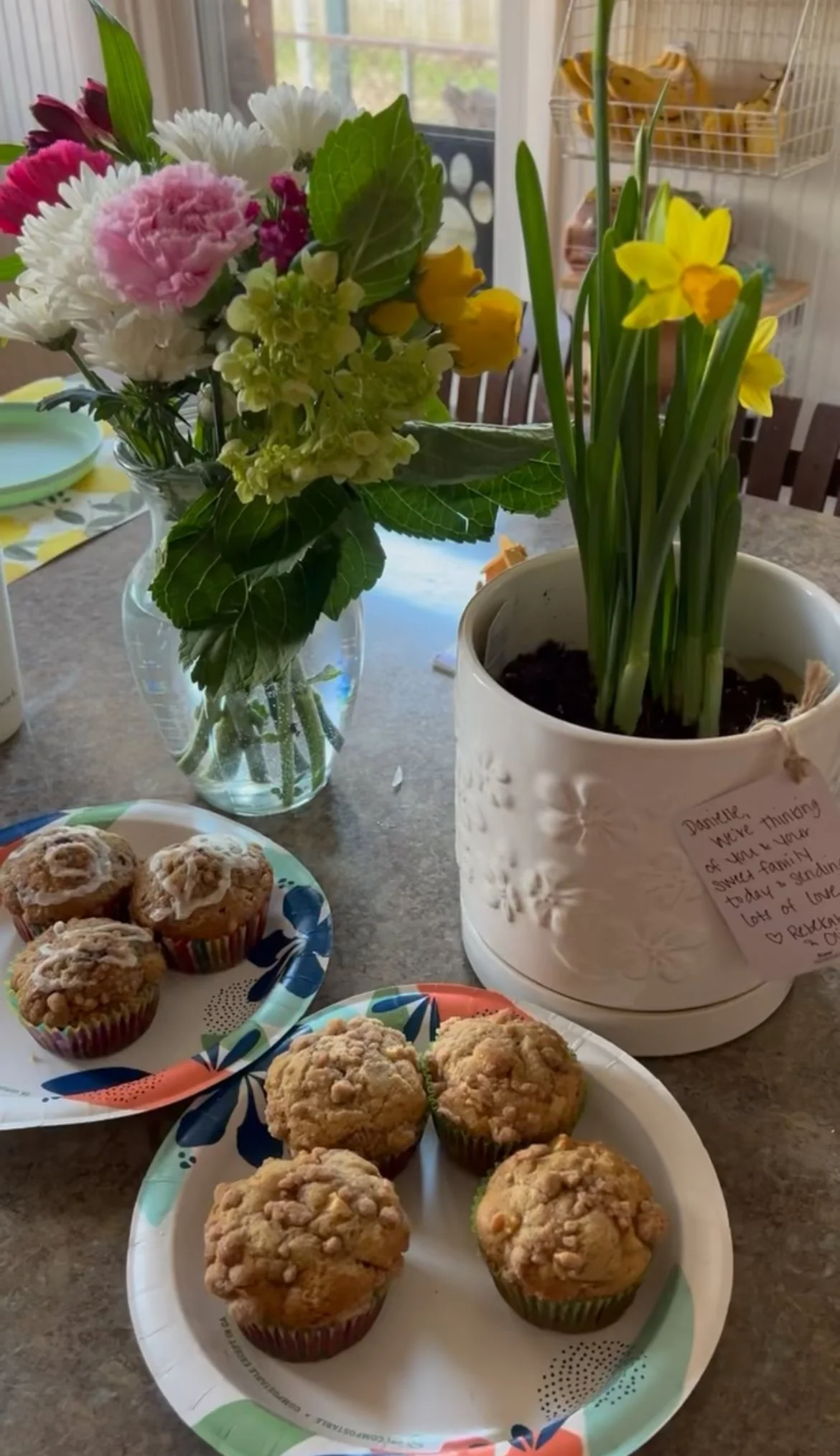
Part of being able to intentionally rest is about letting others know what you’re going through and accepting their offers of support (or asking people specifically for what you need). When a pastor from my church reached out to ask about how to support us, I decided that a meal-train would be helpful because cooking is something that takes up a lot of mental space and time in my daily life. It meant announcing my miscarriage to our entire church, but it was worth it! Receiving caring notes in the mail and having meals delivered meant so much to me as I recovered. Other friends doorstep dropped off muffins & flowers and checked in by text, all of which brightened some long days.
PS - The muffins my friend made were from Sally’s Baking Addiction blog and they were perfection!!
Boosting Iron Intake
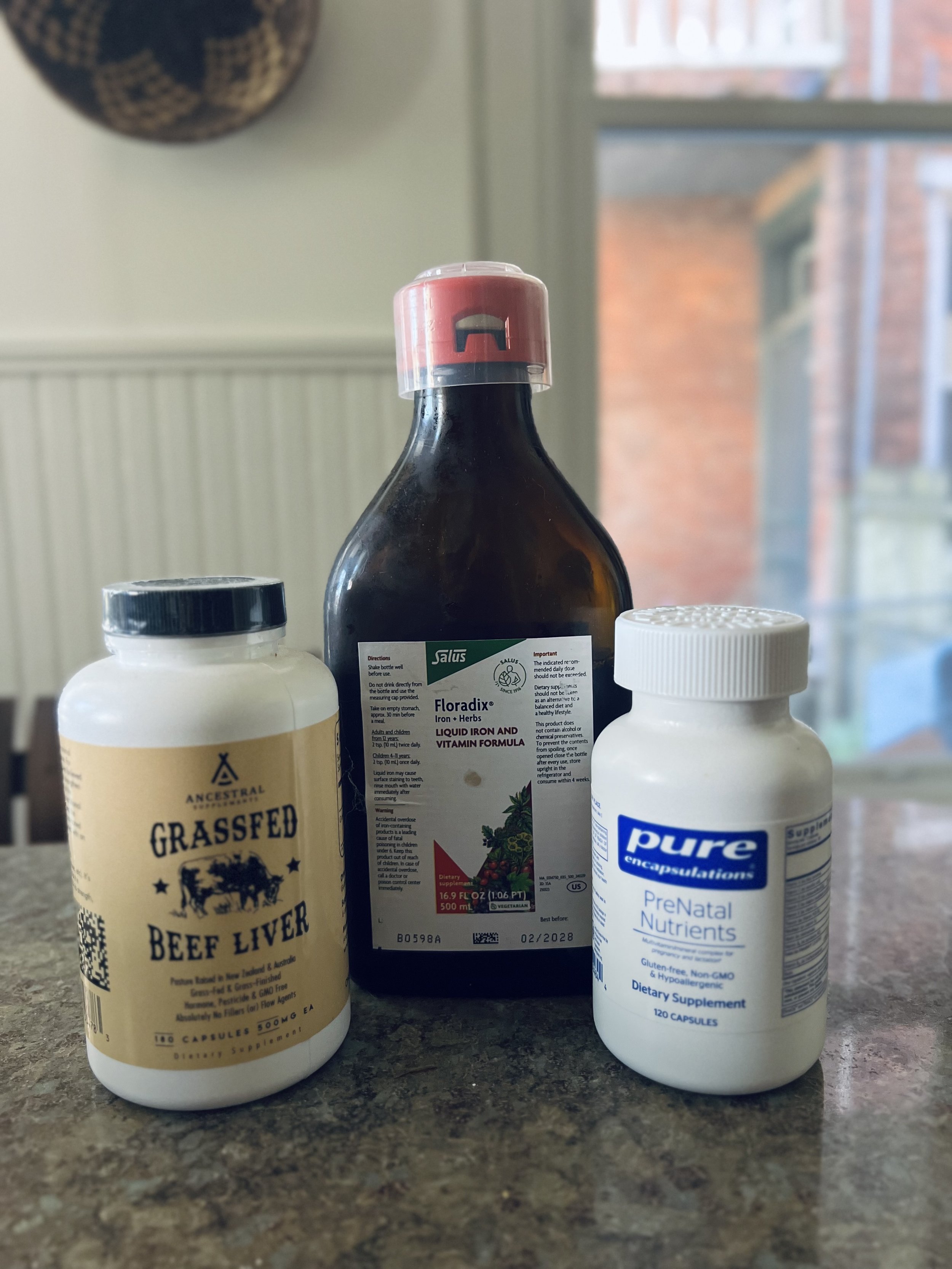
Because of all the blood loss, it was important to supplement with iron to help replenish my red blood cells. Something helpful to keep in mind is looking for absorbable forms of iron because most multi-vitamins and prenatal vitamins do not use the most ideal type (which also can lead to more constipation). Look for “iron bisglycinate” on the nutrient label - I like the Pure Encapsulations prenatal but there are others too. Additionally, I took Floradix and occasionally mixed some molasses into water (drinking it felt easier than eating a spoonful). There are also many foods that are excellent sources of iron, specifically things like chicken or beef liver, clams or oysters. Personally I cannot handle eating any of those though, so I did the supplements.
Writing & Reflecting
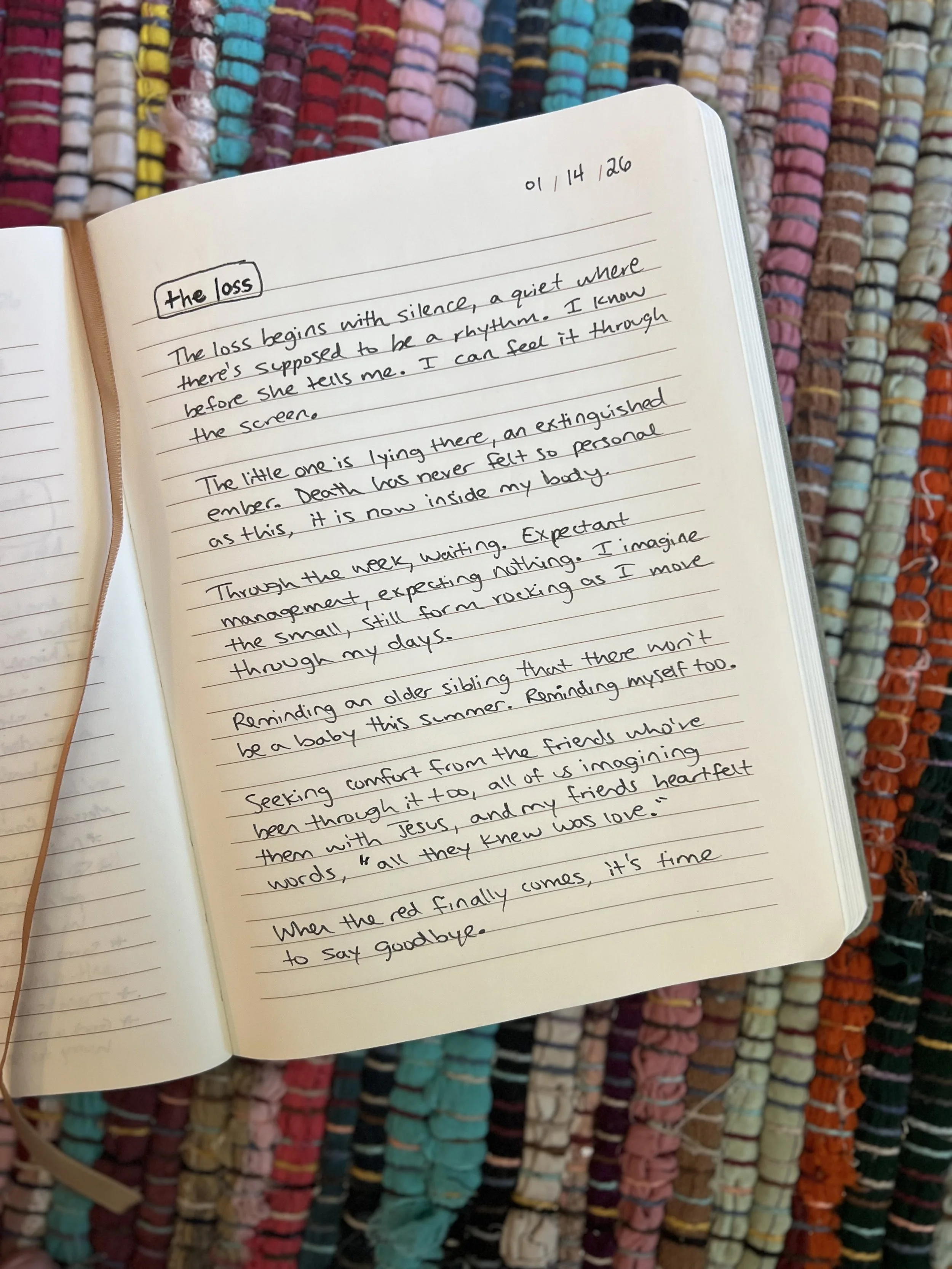
Part of my recovery was allowing myself to *feel the things!* Writing has always been a meaningful, therapeutic way for me to express myself, but since having kids I have not made much time for it. To process the miscarriage, I jotted thoughts as they came to me and then pieced them together into a short reflection that I felt fully captured my experience. For those who do not enjoy writing, you could instead try talking to a friend, audio recording your thoughts or making a song.
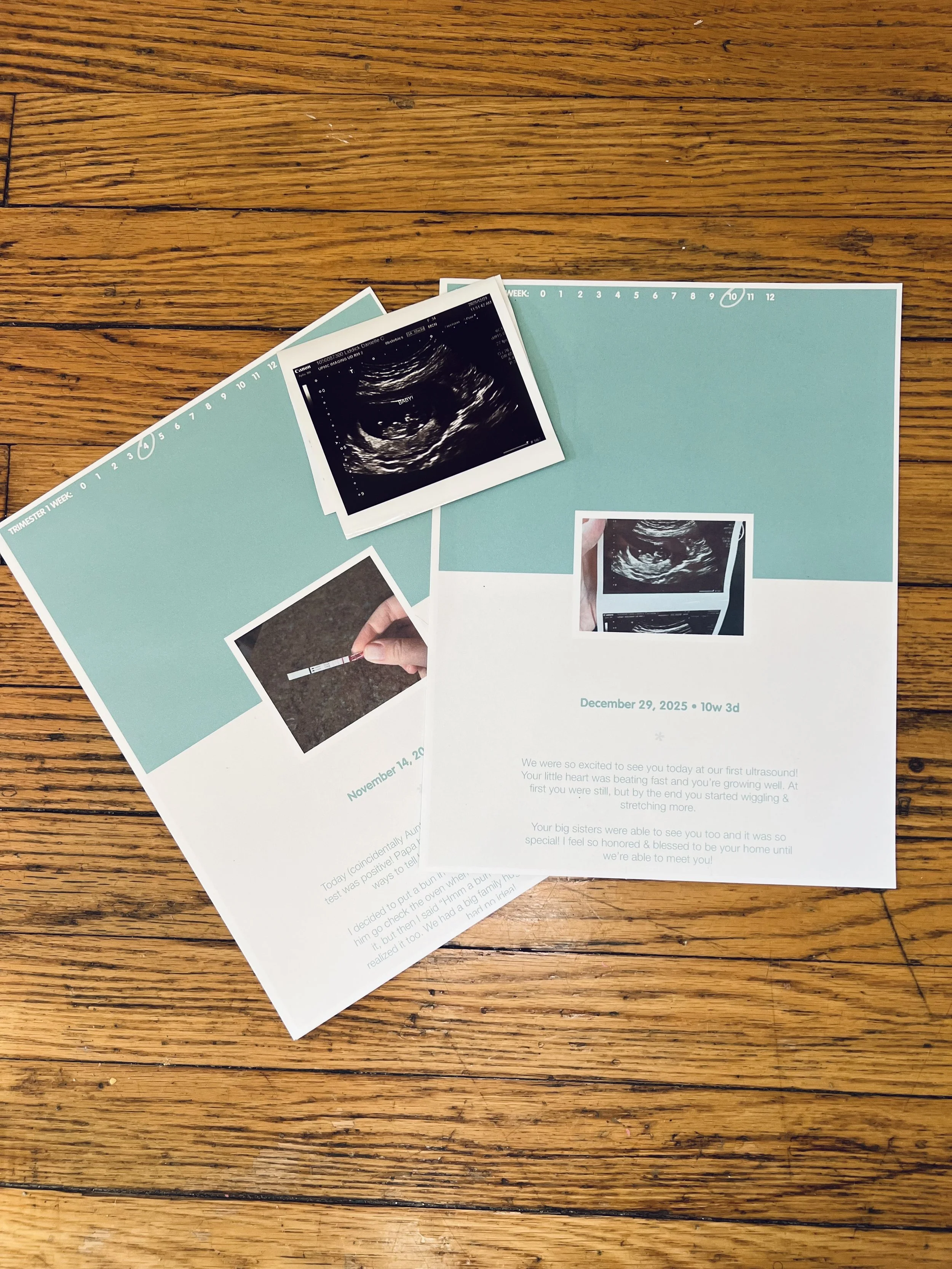
Making A Pregnancy Journal
My pregnancy app Sprout has a section for recording pregnancy notes which made it so easy to print off a pdf journal of what I had written. Even though it’s sad, it’s meaningful to me to have it documented, and I was also able to glue in the few ultrasound pictures I had, as well as some notes from friends.
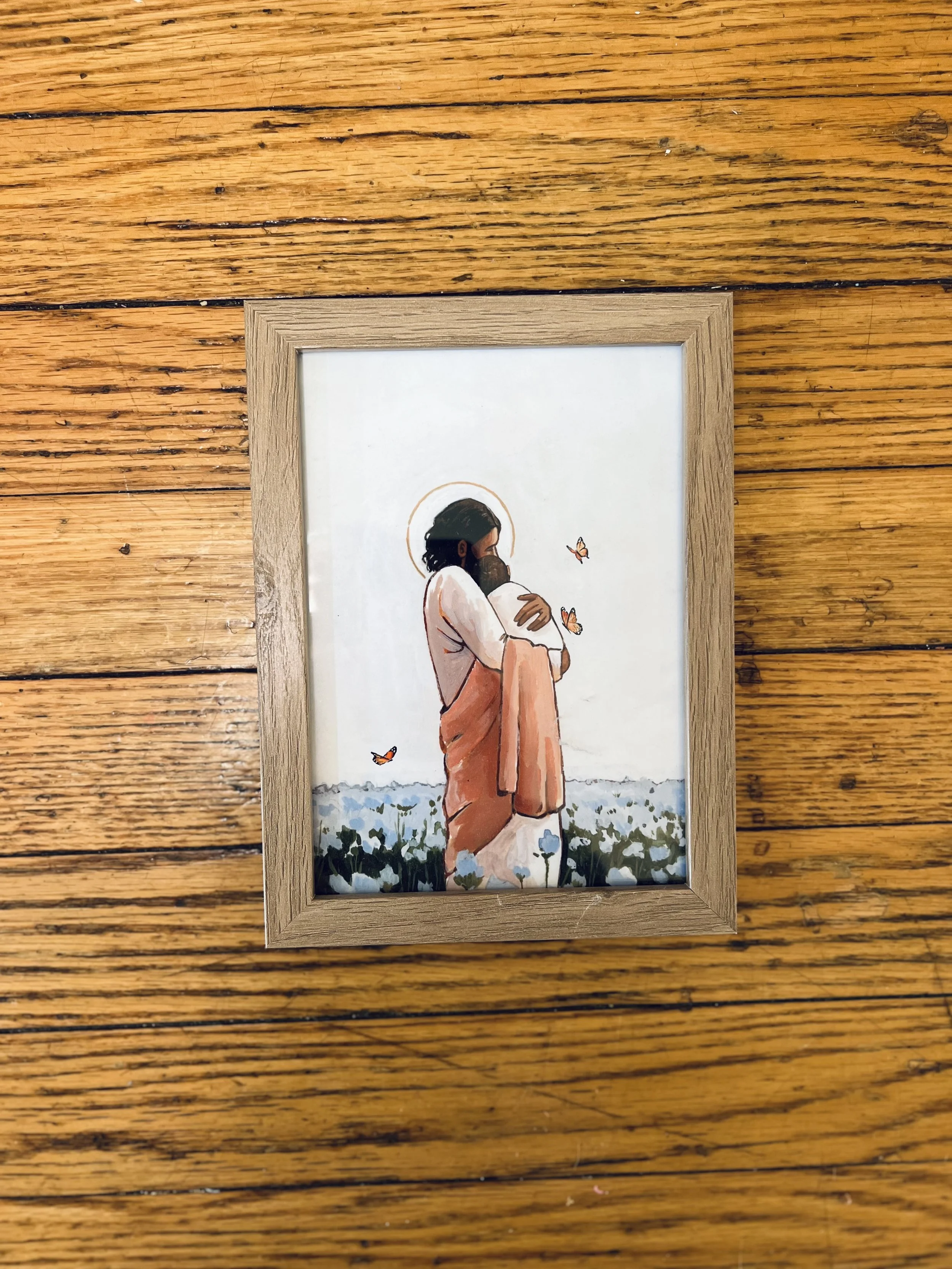
print by Paige Payne Creations
Buying A Memento & Naming The Baby
Similarly to the journal, it was meaningful for me to buy something in memory of the baby and also to name the baby. Not everyone will feel this way, but for me this helped to make the intangible grief more real. With a pregnancy loss there is no specific person to grieve, rather it’s the loss of an imagined future, so having ways to validate that allowed me to actually be upset.
I especially love the work of Paige Payne Creations on Etsy because as a Christian the image of Jesus holding my little one gives me great comfort. However, there are so many other ways to remember your baby, such as customized jewelry or planting birth month flowers. You can read more specifics in this blog post: Resources for Pregnancy Loss.
Having A Project To Work On
On an average day I like to keep my brain busy, so it was all the more important through this process to have something to work on and look forward to. The timing worked out for me to get into “expo mode” as I call it, where I plan an annual NEST Expo to connect parents with local birth & postpartum professionals. It always gives me a lot of satisfaction to bring it to life and see all the community connections that are made at these events, so it was the perfect thing to work on during this time.

Planning A Trip Over The Duedate
My husband and I decided to take a trip to California to visit my childhood friend over the time that would’ve been the baby’s due-date. My friend and her husband took us to all their favorite spots, and we were lucky enough to see a Trevor Noah show (amazing!!). It was so nice to have something fun to do during what would’ve been a sad time at home. Even if you can’t take a bigger trip like this, just planning a daytrip on your duedate might be a helpful thing to consider.
Getting A Full Diagnostic Work-Up
Because I had two miscarriages, my OB practice was able to get me into their fertility program, which has been amazing! They take a very holistic approach that involved a combination of tracking my monthly cycle and also doing a comprehensive set of labs, an ultrasound and a uterine biopsy to see if they could determine any underlying issues that might have been making it more challenging to stay pregnant. It’s been interesting and helpful to learn so much about myself, and I am hopeful that when we’re ready to try again that there will be a much better chance of success.
If you would are local to Central PA, I highly recommend their practice (UPMC Divine Mercy Womens Health) for any fertility needs and if you’re not local then you can look for practioners who use the NaProTECHNOLOGY method because it tends to be much more comprehensive & diagnostic than the typical fertility care that most practices provide.
If you want share your experience or have any helpful tips to share, I would love to hear in the comments below!
You can check out the other posts in this series here:
How to Make A Miscarriage Care Basket
Sending love and care to you on your journey!
